We’re excited to announce our new app, SynthStamp!
The Vintage Synth Playground You Can Take Anywhere
SynthStamp is a celebration of the history of electronic music, featuring fully modeled engines and familiar user interfaces behind some of the most desirable synthesizers. Tap and drag to patch, save your patch as a preset, and export presets to share across all of your devices including Mac, iPhone, and iPad. Yes that’s right, iPhone. Take your sound anywhere.
Choose Your Adventure
There’s a lot to dig into, we know you’ll have fun creating some inspiring sounds. Key features for this initial release include:
Stereo audio input for realtime effects processing
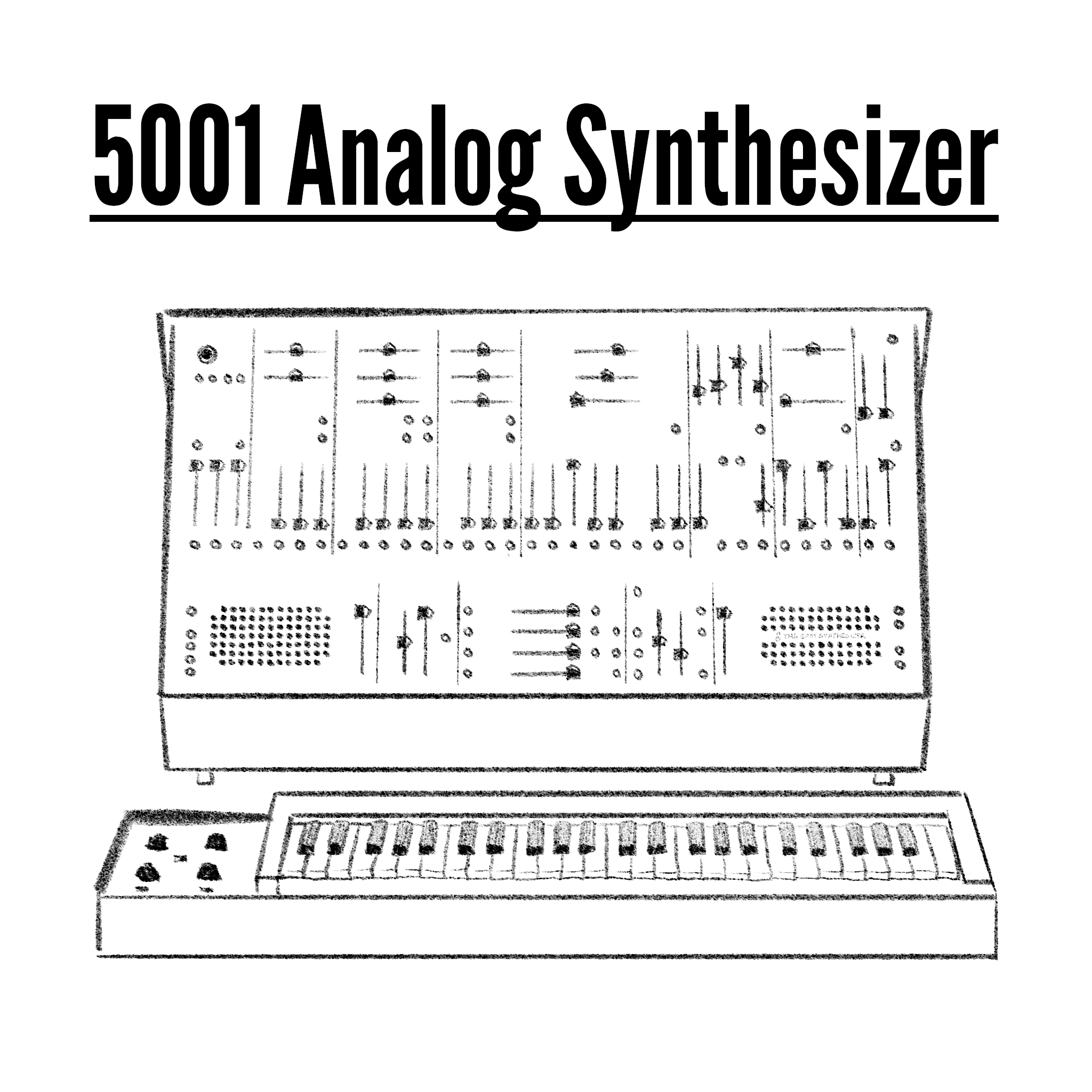
Model 5001 based on the ARP 2600–finally on mobile
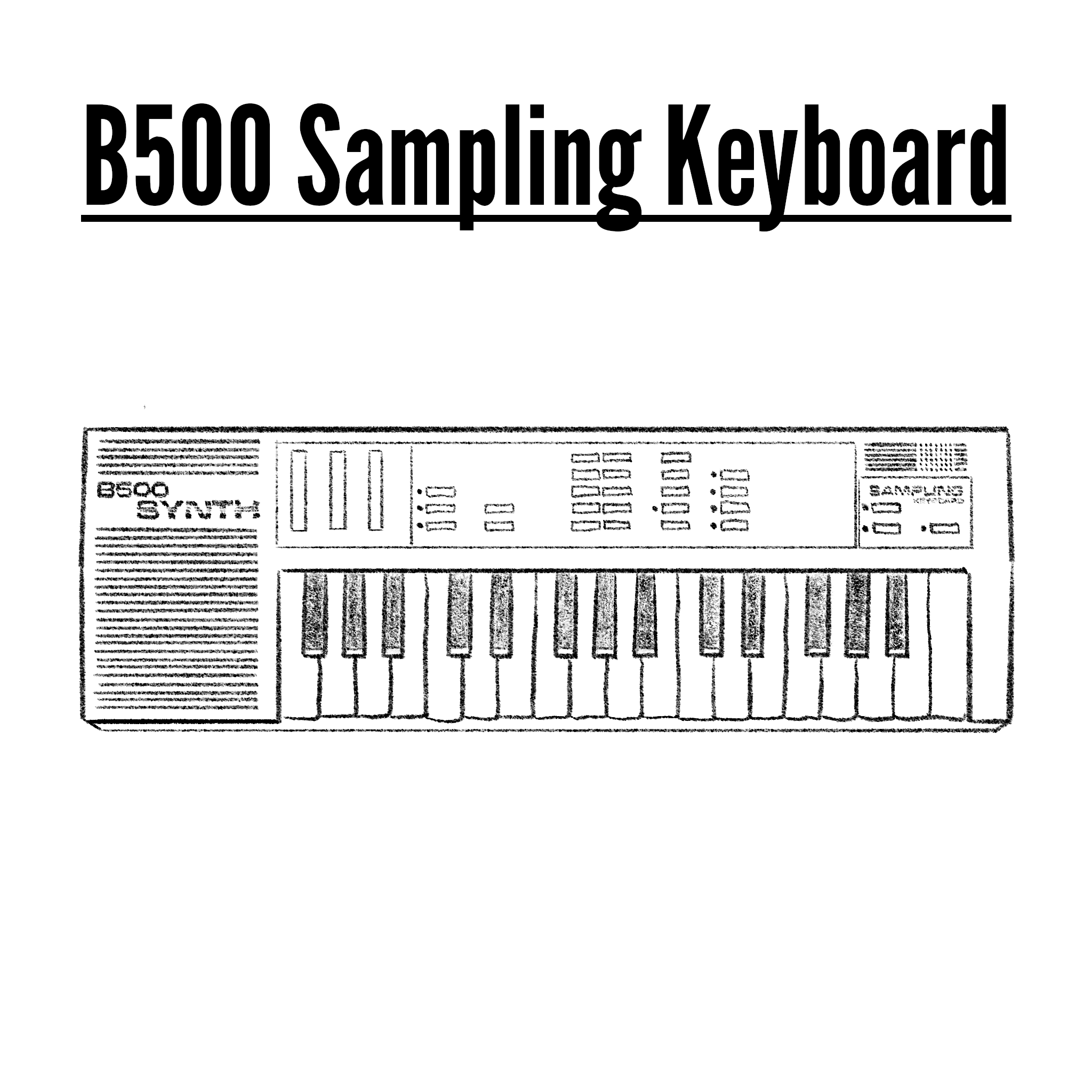
Circuit-bendable model B500 based on the SK-1–we haven’t seen one either
Stay Tuned for New Gear
We’re launching release 0.9 to get these synths out there and in your ears. We’re seeking some early feedback and will be rolling out an official 1.0 release shortly. This will include additional features like sequencing and, of course, more synths. Let us know what you think and what you want to see next!
Get ready for a combination of metals so sweet alchemists would be proud, _the_ secret weapon amplifier, a classic distortion prime for modification, and sub-octave sounds that will rattle your brain. Let’s dig into the next release of AmpStamp.
Introducing Cabinet Drive
ATTENTION: No speakers were harmed in the making of these tones.
By the mid-1960s, amplifiers were getting louder. Concert amplification had not matured beyond public address systems previously installed in many halls, specifically tuned for voice. Guitarists were forced to use their amplifiers to adequately fill space. Amps needed to get louder. Way louder. When Jim Marshall introduced the first 100 watt amplifier to the world, combined with up to two 4×12″ cabinets, the game was on. As amplifier power sections were getting, well, more powerful, speakers could not keep up with the increased output. This would eventually force complimentary development in speaker technology, but before that could happen, many speakers saw their last days. Pushed to the edge both physically and electrically, speakers would either tear or overheat causing irreparable damage.
It’s that sound, right before untimely end, that we sought out with our new feature Cabinet Drive. Made available on specific low power speaker models, Cabinet Drive allows individual cabinets to be over-driven akin to being pushed by an amplifier that is too powerful. The effect can be dialed in to simulate subtle peak voltage effects that often happened with mismatched power specifications between peak and root mean square (RMS), or the more extreme effects of sonic destruction. Note: when Cabinet Drive is engaged, the global Master Volume control becomes interactive and can also be used to control drive level.
The Secret Weapon
Th 315B Amplifier features a unique tone circuit that covers a wide range of possibilities, from warm and mellow to bright and cutting. It was Paul McCartney’s first amplifier, and possibly used by Dave Davies of the Kinks, more on that at a later time.
Heavy Metal Starter Kit
One might suggest parametric equalization was a critical element in the birth of heavy metal, we certainly would. This effect brought scooped mids to it’s inevitable extreme. Beyond that, the tight control over all frequency ranges makes it a must-have in any toolkit. We recommend trying this on anything and everything. From fuzz to distortion, FX loops, and even clean tones, if you’re looking for variation, the EQ200 Dual Parametric Equalizer won’t disappoint.
Mod Culture
Is anything really stock? From the first recorded sounds, artists and engineers have clung to special gear, either formally modified, or hand-selected from mass-production for tonal qualities that enabled performances beyond normal expectations. Eventually wizards emerged, claiming special talents that could transform ordinary equipment into things otherworldly, and oh the tone, oh the tone. For guitar players, this started with modifications to their amplifiers for more sustain. Before distortion became the neatly packaged effect that we know of today, musicians were discussing distortion as a means to sustain notes for much longer than seemed humanly possible. Phrasing lead passages or melodic parts could now encompass note lengths previously unheard of, perhaps held only by traditional brass or woodwind instruments via breath control.
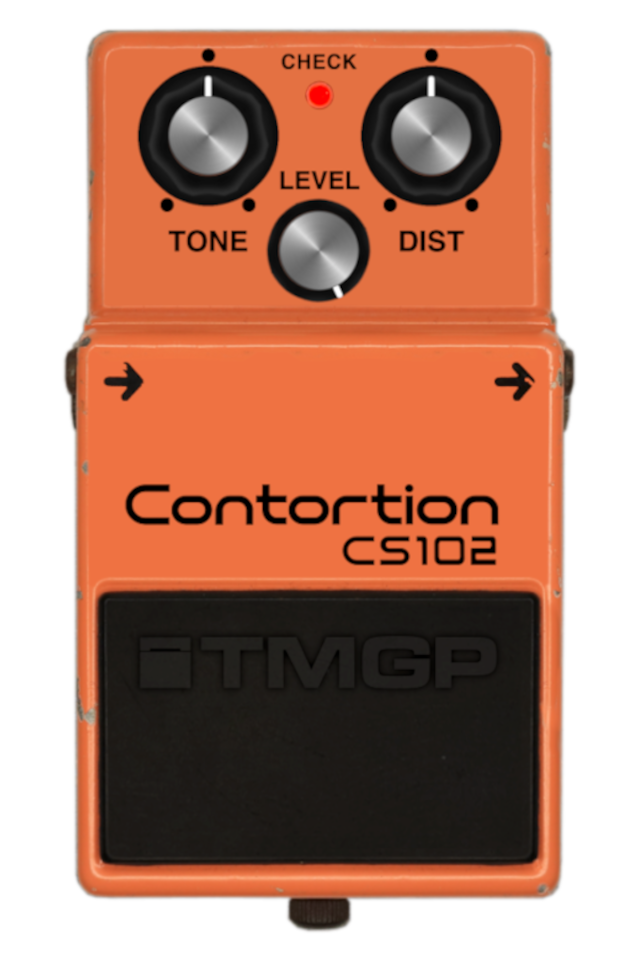
But we digress. With the CS102 Distortion, we included several popular modifications that can transform the pedal from it’s humble beginnings into a screaming monster with sustain for days, literally.
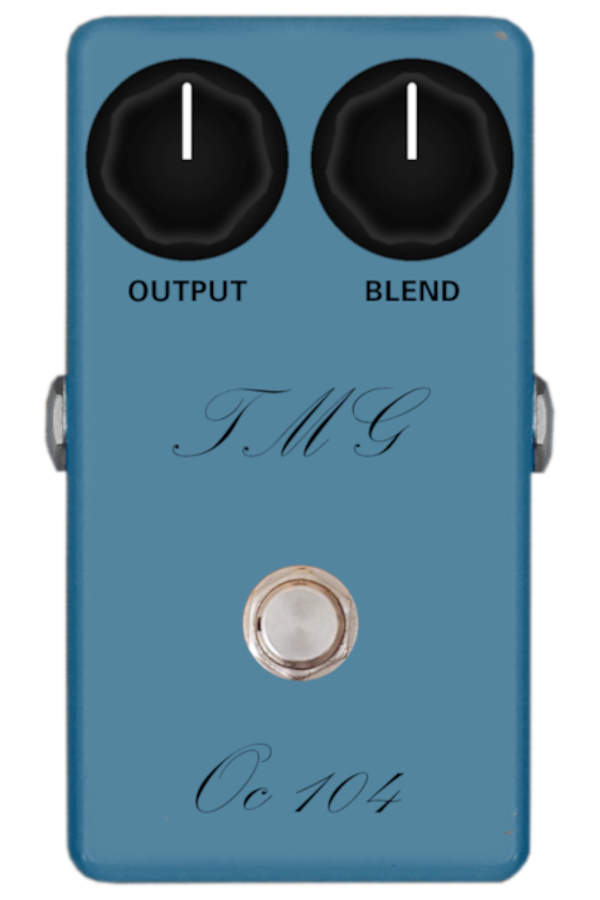
Inspired by a payphone hack, the OC104 Octave Fuzz effect never really found it’s place outside of a notable solo from Jimmy Page. Truly a one-trick pony, we’ve added a couple of features to make things more interesting. It’s a great pedal to throw into any mix, if only just to see how things react.
Aluminum, Nickel, Cobalt
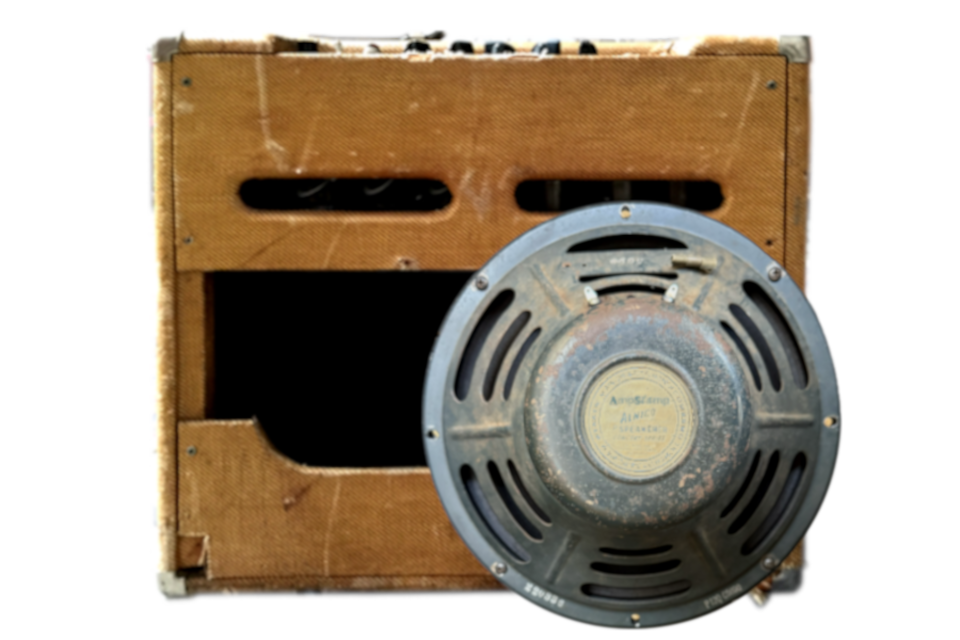
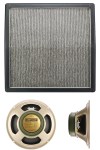
Ah, the sweet sound of alloyed metals. In this case, aluminum, nickel, and cobalt. Typically lower in power than their ceramic counterparts, but with way more character. Paired with the right amp, the VG 1×12″ 15w ’63 Cabinet really sings. Hint: crank the Bass up beyond what you would normally set, this speaker takes it really well. We promise you’ll be delighted by the thump in your playing that you don’t typically hear on records these days.
207A Amplifier Update: Bass Boost
Fresh on the heels of introducing the 1×12″ 15w ’63 Cabinet, we felt it was necessary to allow for increased Bass from the 207A Amplifier. With that comes a very famous defect in tweed Fender amplifiers classified as blocking distortion. With an increase in bass, and a lack of filtering, you can now dial in the amount of blocking distortion from minimal to extreme with the Bass Boost control. Keep in mind that this also depends on where the Volume and Tone controls are set. Blocking effects will be reduced and/or eliminated at lower volumes.
408D Amplifier Update: Boost Channel ’83 / ’87
With the introduction of the 408F Amplifier, we didn’t want to leave the 408D Amplifier in the dust. It was around the same time that the team at Marshall made a number of adjustments, including repositioning where the tone stack was in the Boost Channel signal chain, likely to match what had been recently achieved with the Silver Jubilee series. In this case though, the clean channel volume is noticeably louder which may have resulted in extending diode clipping to the clean channel as an option in the Silver Jubilee series. Here we’ve added a new Boost Channel option to choose the era of gain lineup, ’83 being the original release and ’87 the updated, re-positioned version. With the updated version, this will sound more like a classic Master Volume 2203 model on lower gain settings with the enhanced ability to scoop mids. With increased gain, you’re definitely in heavy metal territory which is a major feature of the 2210 model. Time to dig in.
Same Subscription, More Great Products
As always, we think you’ll find that AmpStamp has endless variations of tone to satisfy guitarists in any genre of music. If you’re already a subscriber, thank you! If you haven’t subscribed yet, hurry up! You’re missing out! Check out the Gear Shop and stay tuned for new products.
With the release of AmpStamp 1.9, we explore a funk classic, dive deeper into late ’80s hair metal, and solve one of rock’s most revered and long standing mysteries.
ACHIEVING HIGHER GROUND
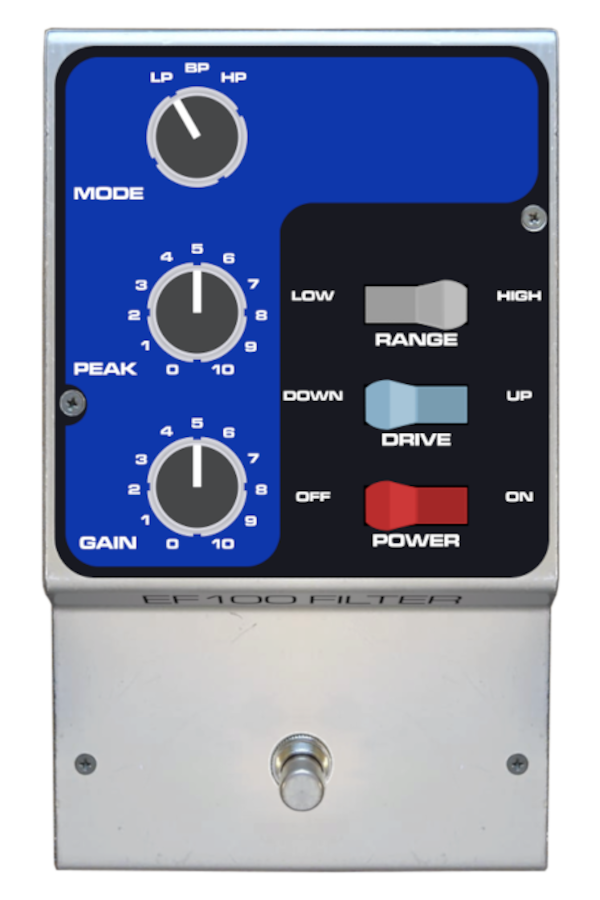
It goes without saying that the envelope filter is a really cool crossover effect. Stemming from early electronic music pioneers like Bob Moog, the E combines the functions of an Envelope Follower with a Voltage Controlled Filter, both available as early as 1968 in modular synthesizer format.
When Mike Biegel of Musitronics set out to build something new for guitarists, it’s unlikely he could have predicted the instant success of this effect. By tracing the amplitude of an input signal, in this case the guitar output volume, this could be converted into a voltage that could shift the frequency of a filter. The sound is similar to rocking a wah pedal back and forth, but automatically, hence the common alternate name for this effect, auto-wah. The EF100 Filter inspired funk classics from artists like Stevie Wonder and Bootsy Collins, and paved new sonic highways with artists like Jerry Garcia. It’s an effect with instant appeal that continues to be sought after today!
And in a similar vein, we’re introducing another synthesizer classic, the RM100 Ring Modulator! More experimental in nature, a ring modulator takes two inputs and generates frequencies at the sum and difference of the input and output. It gets even more complex when each of the inputs represents more than one frequency, for instance with chords on the guitar. We encourage you to try this effect on everything, but be careful!
SIDECHAIN INPUT
We’re also excited to introduce support for Sidechain Input, specifically with the EF100 Filter and RM100 Ring Modulator, for use in DAWs like Logic Pro. Sidechaining is a technique that became popular when using compression. The concept involves using an alternate signal to control the amount of compression that’s affecting the main audio signal. For instance, the mix bus could be compressed more heavily whenever the kick drum hits, a common practice in dance music production. For guitar, however we have repurposed this solution to provide multi-input capability to these two effects.
For the EF100 Filter, this means that your sidechain input with control the filter, however your main input, likely your guitar, will be the signal that the filter is affecting. So you could in fact modify the filter on your guitar whenever a kick drum hits.
For the RM100 Ring Modulator, the sidechain input will act as the carrier and replace the internal oscillator. This means that you could modulate your guitar with virtually any input, including your voice! Now you can unlock the demonic spoken intro to Iron Man by Black Sabbath, “I am Iron Man!”
NINETEEN EIGHTY-SEVEN
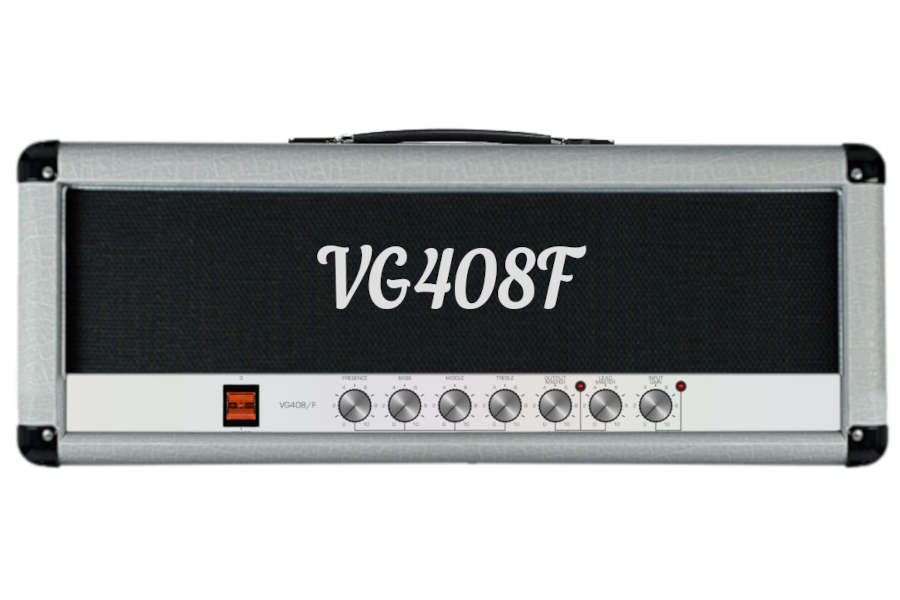
Clad in silver tolex, the VG4008F Amplifier and VG 4×12 300W ’87 Cabinet are going to be a welcome addition to any thrash metal enthusiast’s collection. The tonestack was truly dialed for thrash, but the amplifier remains versatile with decent crunch and clean tones as well by disengaging Rhythm Clip.
LEGENDARY TONE
Stay tuned for a new Classic Sounds Series post coming up. We’ve unlocked on of rock’s great mysteries and we’re extremely excited to share our findings with you. Of course, we’re talking about the unmatched tone of Eddie Van Halen on their debut record, recorded in 1977, released on February 10th, 1978. Many have tried, all have failed. It’s a tone that has become mythological at this point. Unachievable by mere mortals. There are pedals involved, possible modifications to the amplifier, a specific selection of speakers and cabinets, the recording techniques employed, not to mention the virtuosic playing. There is a lot to unpack, and we (the collective we) have been unpacking it for 46 years. Not anymore!
SAME SUBSCRIPTION, MORE GREAT PRODUCTS
As always, we think you’ll find that AmpStamp has endless variations of tone to satisfy guitarists in any genre of music. If you’re already a subscriber, thank you! If you haven’t subscribed yet, hurry up! You’re missing out! Check out the Gear Shop and stay tuned for new products.
With the release of AmpStamp 1.8, we venture deeper into the world of guitar tone, into uncharted territory, to bring you relics from eras past.
Woolly Mammoth
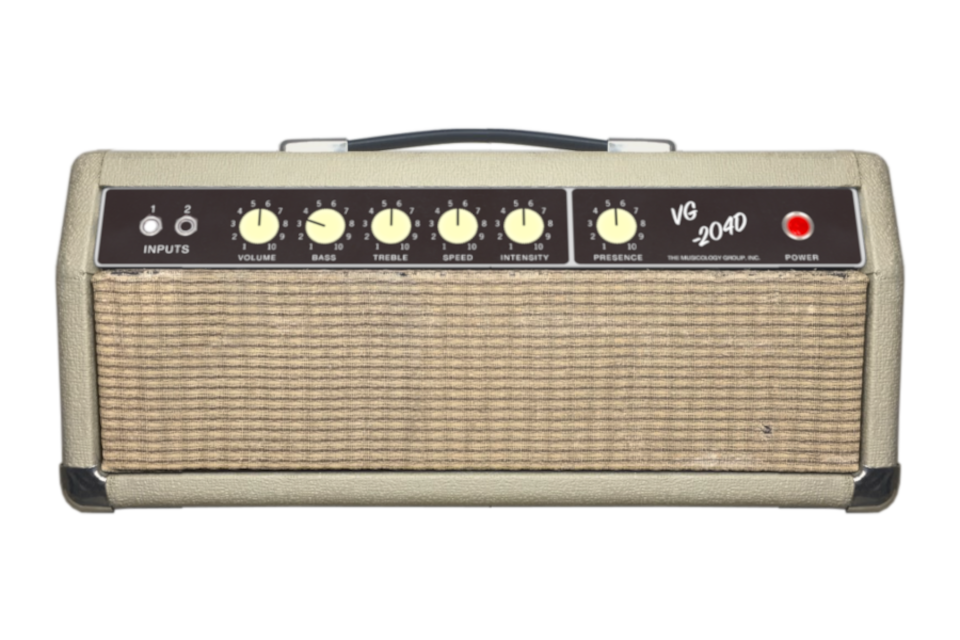
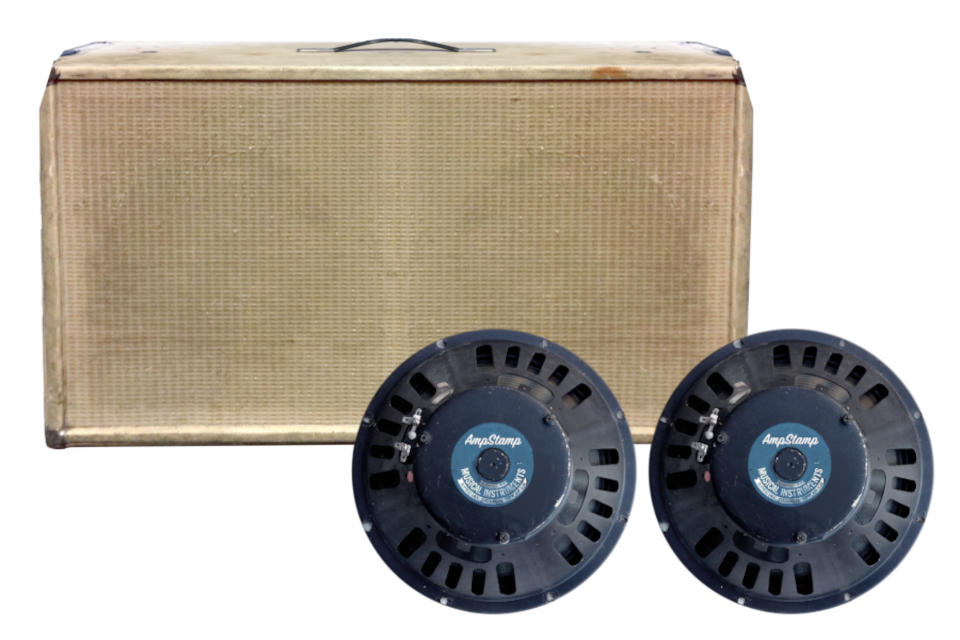
Let’s start with the VG204D Amplifier and VG 2×12 PB 100W ’63 Cabinet. This amplifier and cabinet exemplify an era of amplification that we haven’t heard from in a while. The tone is raw, chewy, and complex. Dial the cabinet Color darker and boost Presence for a unique bite.
Kick a$$ and Scream
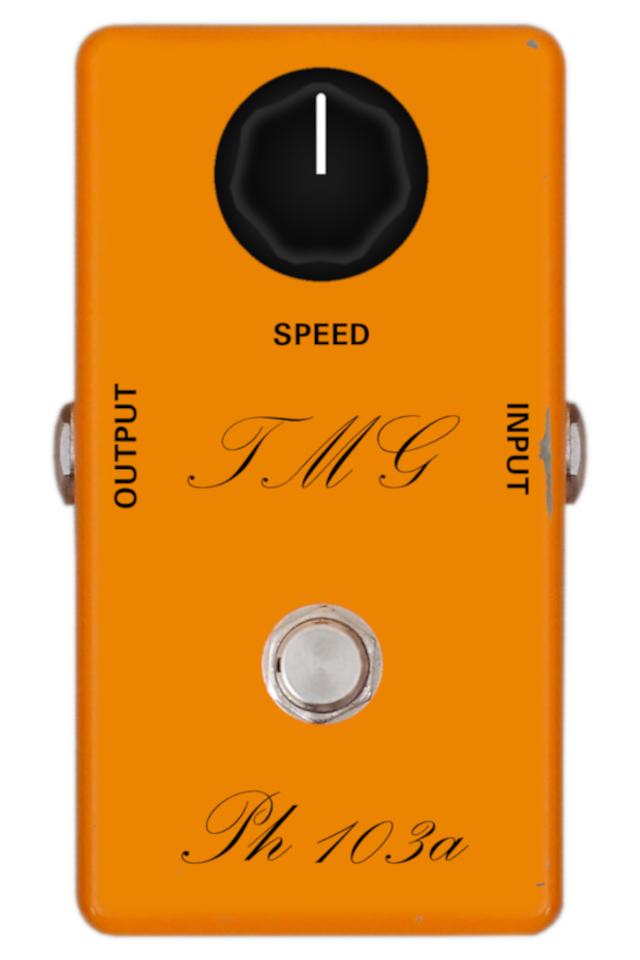
Of course, you’ll need some modulation to add movement to your tone, enter the PH103A Phaser, and FL101 Flanger. At least one of these two effects is found in almost every pedal board today. They are instant classics, and we’ve added a twist. You can push the Feedback (PH103A) or Regeneration (FL101) into self-oscillation. Let the noise rock begin.
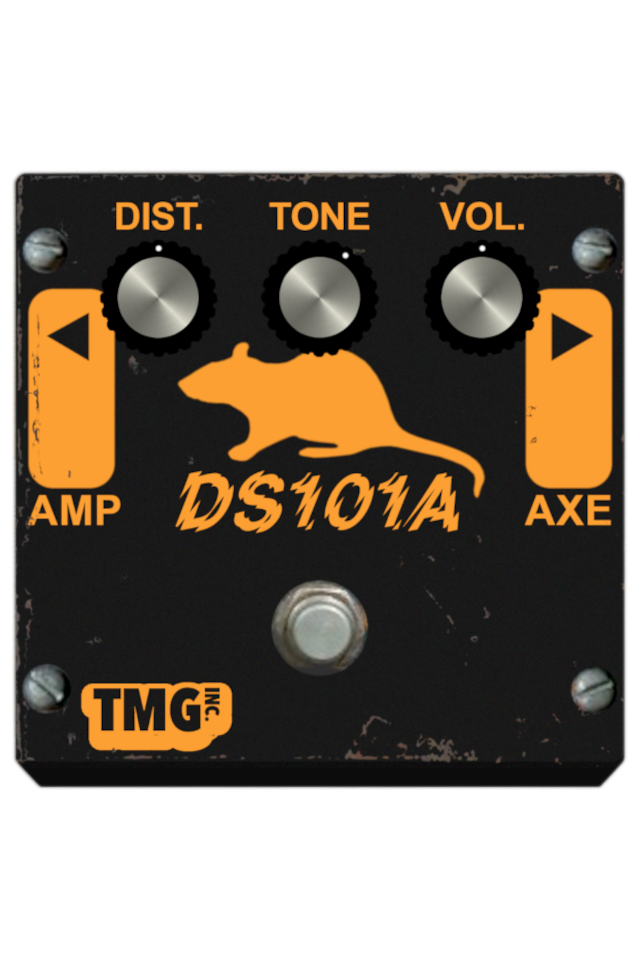
We’re also introducing the DS101A Distortion. Presented in it’s bud box form, this pedal brings a level of distortion that was unheard of in 1978. Here too, you can easily push the Feedback into self-oscillation. However, try dialing it back just before that point, then crank it for brink-of-destruction tone. Oh, and don’t forget to have fun tweaking Slew Rate.
Singing and Chirping
While you’re wailing away, don’t forget to add some Ambience. With the AMB 200 Spring Reverb you can now add the unmistakable chirp of spring reverb to any amplifier and cabinet. We’ve kept the same controls from our other ambience effects so you can even dial back the decay and create a springy room reverb.
SAME SUBSCRIPTION, MORE GREAT PRODUCTS
As always, we think you’ll find that AmpStamp has endless variations of tone to satisfy guitarists in any genre of music. If you’re already a subscriber, thank you! If you haven’t subscribed yet, hurry up! You’re missing out! Check out the Gear Shop and stay tuned for new products.
With the release of AmpStamp 1.7, we’re excited to announce that we now support macOS! Starting with macOS Catalina and Big Sur, you can now rock out with AmpStamp on your Macbook or Mac, as well as record with AmpStamp as an Audio Unit (AU) in your Digital Audio Workstation (DAW) of choice, where AUs are supported.
SAME SUBSCRIPTION, MORE FLEXIBILITY
If you already subscribed or purchased gear, then you’re all set. Your purchases and subscriptions will transfer automatically, as always they can be restored if needed. With the ability to run as an Audio Unit (AU), you now have even more flexibility. By running multiple instances of AmpStamp in your DAW, you can experience:
Parallel Processing – blending different amplifier and cabinet combinations
Chaining – running the pre-amp of one amplifier into the power-amp of another (for amps with an FX Loop, set to Return)
Post-FX – placing stompboxes after cabinet and ambience effects
Post-EQ – taking advantage of your DAW’s channel strip for additional tone sculpting
HIGH RESOLUTION AUDIO
We’ve also added support for high-resolution audio with sampling rates up to 192kHz. When you’re creating your masterpiece, audio quality is of the most importance. Extending sampling rates beyond what is required for human hearing can avoid aliasing when distorting your input signal. This becomes especially important when running high gain amplifiers and recording more modern guitar tones, but the entire signal chain will benefit from this decision. We’ll be going into more detail on how to get the most out of your signal chain since running at a higher sampling rate also uses more processing power.
AUPRESETS
When you’re ready to save your sound, you can still do so with the internal bank provided by the Floor Controller. This bank of presets is synchronized between our standalone application and all Audio Unit (AU) instances, available on all platforms (iOS, iPadOS, macOS). Additionally, we have added support for AUPresets which can be saved externally on macOS and shared with anyone. On iOS and iPadOS, AUPresets are saved to an application directory and can be recalled at any point within your DAW. To get started, we have also converted our Factory Presets into AUPresets as well, making preset navigation easier when running as an AU. AUPresets are seamlessly bridged with the internal bank of presets, giving additional flexibility if you need to save an update for recall with MIDI and/or live operation.
EXPLORE AND MORE
Stay tuned for our evolving Explore tab where we feature Classic Sounds, Field Guides, new System Presets, and much more. We’ve added a new Ambience effect, the AMB300 Echo Chamber. Now you can get the rich sound of a chamber behind your guitar which has powered classic hits for decades. And the ’80s are by no means over. With the introduction of High Gain amplifiers, there is still a lot of ground to cover!
Welcome to the eighties! With the release of AmpStamp 1.6, we are ushering in the era of high gain amps with some serious tone sculpting, effects loops, MIDI control …oh the technology! From blues revival to early thrash metal, there is a lot of ground to cover. Classics were becoming classics and modifying said gear was in vogue. Everyone was searching for something uniquely theirs, the ability to stand out from the pack. Now it’s your turn to relive some of the early tones from the most decadent of decades.
MIDI CONTROL
With support for MIDI Control, you can now take your tone live! Using basic MIDI messages, you can change presets, toggle switches, control knobs, and of course use the expression pedal, all from the perspective of the Floor Controller.
By using the Routing Editor to configure how each of the controls interacts with your effects, amp, cabinets, and ambience, there is a virtually limitless combination of control that you can program. Combined with hands-free access, it’s time to rock!
HIGH GAIN CLASSICS (WITH FX LOOPS!)
What is there to say about the amp that defined high gain for the ’80’s and continues to be sought after today? Well, here it is, the VG802C Amplifier. Those in the know might understand that this amplifier went through several revisions and was getting constantly tweaked until it finally arrived at its most coveted version. We’ve captured that here, as well as an optional flaw/feature with the original implementation of the FX Loop.
Which brings us to FX Loops! What would go on to define a modern feature set for an amplifier in the ’80’s definitely included an FX Loop. With all of the gain now happening in the preamp section, it made sense that things like echo should be after the distortion for a more realistic sound, similar to what studio engineers could provide during the recording process. Doing this also cleaned up effects like chorus and flangers too!
Speaking of modern feature sets, the VG408D Amplifier would define the next several decades of modernism in amplifier design. With channel switching, an FX Loop, and built-in Reverb, it was all there. This amp would gain some notoriety for including a diode limiting section, and also went through several revisions.
We’ve captured one of the earlier incarnations, and on playback we think that you’ll agree, this is a classic! Don’t miss out on the awesome clean channel too, there is a lot of tone to be had with this one.
SUGGESTED MULTI-SPEAKER PAIRINGS
Of course with each great amplifier must come a great cabinet. And we’ve got just the thing for the new high gain amps. The VG 4x12HBA 250W ’85 Cabinet and the VG 4x12B 260W ’82 Cabinet. We suggest mixing and matching to find your tone. These ’80s cabs also sound great with some earlier classic amps too, more to come on that soon!
Each cabinet features either two different speakers, or a blend of similar speakers in different positions. We think you’ll instantly fall in love with these cabinets.
MORE EFFECTS
Here we have the definitive overdrive, perfectly complementing a high gain amp, cleaning up some flub in the bass, and adding just a little nudge during a ripping solo. The OD101 Overdrive definitely delivers. We’re exited to explore the wonderful world of overdrives in parallel with our extensive collection of fuzzes.
And of course, the ’80s would not be complete without a chorus pedal. The CH102 Chorus may not have been the first but it certainly is one of the most distinctive. Add a subtle shimmering effect to clean tones, more width to distorted tones, or crank up the speed for some otherworldly sounds!
But don’t bother listening to us, just plug in and play…
SAME SUBSCRIPTION, MORE GREAT PRODUCTS
As always, we think you’ll find that AmpStamp has endless variations of tone to satisfy guitarists in any genre of music. If you’re already a subscriber then thank you! If you haven’t subscribed yet, then hurry up! You’re missing out! Check out the Gear Shop and stay tuned for new products.
With the release of AmpStamp 1.5, we’ve added an entirely new category of products–Ambience effects, expanded the tonal capabilities of all cabinets, and added a new 2×12 combo that has been a missing link at the heart of countless classic tones. As we continue to iterate, the number of unique tones that you can achieve with AmpStamp is ever-increasing. With more accuracy, and amazing levels of touch sensitivity, we think you’re going to find endless inspiration in your playing. Let’s take a quick look at what’s new!
Color and Offset
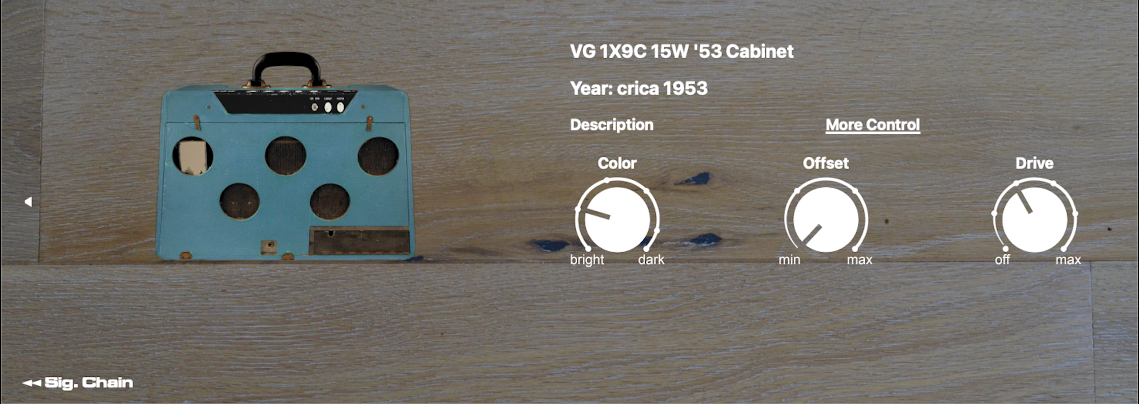
We have updated all cabinets with Color and Offset controls. Color transitions between the unique sound of miking a speaker at its center (Bright) versus all the way out at the very edge (Dark). Offset places a second angled microphone near the edge, simulating a common technique used to tame a bright top end.
This makes the unique tonal combinations with just one cabinet very deep, not to mention when blending two cabinets together. The possibilities are wide and varied, and we encourage lots of experimentation with these new controls!
Ambience
We’re also excited to announce the addition of Ambience effects to AmpStamp! Once you have the right amplifier, cabinet, and effects, that will get you extremely close to your favorite records. But that last mile of the signal chain, for instance adding something like a plate reverb, really puts a finishing touch on your tone.
Expensive, hard to find, and hard to maintain, the legendary sound of plate reverb is now at your fingertips with the AMB400 Plate Reverb. We’ve also added a few conveniences like high and low pass filters, as well as pre-delay, elements commonly used in the studio to shape the final guitar sound.
And for close-in, tight room sounds, we’ve added something more basic. Check out AMB100 Early Reflections. This effect captures a series of reflections in three dimensions, similar to how an acoustically treated studio might sound. But of course, you can exaggerate the effect, with a bigger, longer echo, or get closer and more claustrophobic, like an isolated booth typically used when driving amplifiers at full volume.
With this new category of effects you can now get that much closer to the recorded guitars on your favorite records. So keep exploring!
The Missing Link
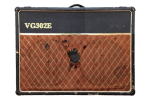
It was surprising to find out just how many artists have used this amplifier in its various incarnations. Once we plugged into the VG302E Amplifier, it became obvious why. This amp is awesome! With relatively low power, an absence of negative feedback, and a now-classic top boost tone circuit, there is a lot that contributes to this amp’s unique sound.
But don’t bother listening to us, just plug in and play. We think you’ll instantly fall in love with this classic. And make sure to try various cabinets, as even today, modern versions will sell with two very different speaker options.
Same Subscription, More Great Products
As always, we think you’ll find that AmpStamp has endless variations of tone to satisfy guitarists in any genre of music. If you’re already a subscriber then thank you! If you haven’t subscribed yet, then hurry up! You’re missing out! Check out the Gear Shop and stay tuned for new products.
We think you’re going to love this next revision of AmpStamp, version 1.4. It’s vintage gear done right so you can sound closer to recorded tones, more than ever before. There are so many sounds packed into this release we didn’t know where to begin so lets just start by giving an overview of what’s new. Stay tuned for more detail about how to achieve some seriously legendary tones with our Classic Sounds Series.
Classic Combo
We’re sure by now that you’ve heard of the mojo tweed amplifiers can add to your playing. Loaded with an upgraded speaker (VG 1X12C 15W ’68 Cabinet), this amp will place you in one of several places… a hot studio in Miami recording some assorted love songs, the studio scene in LA circa 1976/77, or amidst the second guitar revolution that was launched in 1978. Regardless of the year, the tone is unmistakable so make sure to check out the VG207A Amplifier, you won’t be disappointed.
Another 100W Cabinet?
You heard us right, we have another 100W cabinet. This time capturing classic tone from 1973. This cabinet barks and howls at exactly the right moments bringing you instantly into it’s sonic temple. From quiet finger-picked passages to blistering leads and everything in between, make sure to check out the VG4X12B100W73 Cabinet.
Heavy Fuzz
Speaking of blistering leads, get ready for some serious fuzz with the FZ104A Fuzz. What’s most impressive is how different this pedal sounds depending on which amplifier it’s being run through. We encourage experimentation and think you’ll find some really interesting tones. Turning the tone down will add more bass helping to overdrive small combos while turning it up will yield a high end sizzle ready to cut through any mix.
Ultimate Phaser
Last but not least is this awesome pedal, the PH102B Phaser. There is a lot going on with this effect. Simply put, it’s two phasers in one. And you can run them in series or parallel, with the latter configuration giving its characteristic deep phasing effect. But that’s just where the fun begins, the second phaser can also be controlled by a second LFO. In this configuration setting different speeds for each LFO will provide endless variations on some very unpredictable rhythms. Then, each LFO can be toggled between sine and square waves for even more interesting effects. As if that weren’t enough we’ve also provided a twist that allows the first LFO to be modulated by the second LFO. Needless to say there are a lot of options. Oh and try adjusting LDR sensitivity for a brighter or more mellow sound.
Same Subscription, More Great Products
As always, we think you’ll find that AmpStamp has endless variations of tone to satisfy guitar players in any genre of music. If you’re already a subscriber then thank you! If you haven’t subscribed yet, then hurry up! You’re missing out! Check out our product page for more details and stay tuned for new products.
At The Musicology Group we’re constantly searching for vintage gear, listening to classic records, and reading various articles to build a picture of what artists were using in the studio when recording some of their most famous works. Whether trying to assemble a collection of different gear or taking one element and tweaking it to perfection, it has to sound good and it has to sound right.
With that kind of mission statement it’s no less than a miracle when we find the right piece of gear that not only sounds good but sounds right. This is the magic we have captured with the VG 4x12A 100W ’67 Cabinet. Plucked from the confines of a home lost to time, nearly invisible to passerby, it’s what makes for a great quest. We think you’ll agree we have captured the sound of the Summer of Love, the year 1967.
Along with the VG402B Amplifier, your tone will be unmistakably familiar. And you won’t hear it anywhere else as manufacturing techniques and circuit designs after this point went through dramatic change. The intent was to improve upon previous limitations but the result was to isolate a period of rock n’ roll history with a unique sound. Stay tuned as we continue to revisit a long list of classic tones for the electric guitar through our app for iOS, AmpStamp.
With this next revision of AmpStamp, version 1.3, we unveil some legendary speakers from the mid-1960’s, offer up one of the first tone shaping effects, and add a tape echo so classic, all delays that followed make reference to this seminal unit.
The Many Uses Of Tape Echo
From the first notes from Les Paul to the classic recordings made at Sun Studios in Memphis, treating the guitar with echo quickly became a new tool that all musicians had to learn how to wield. It started with a type of echo referred to as slapback, a short delay (longer than what’s used in chorus effects, but those hadn’t been invented yet) that sounds similar to shouting in a narrow alleyway between two buildings. Almost immediately many in the music technology field realized that with a loop of tape and possibly more than one tape machine, the record and playback heads could be used to add a repeat of what was played. This was at first reserved for studio recordings as most musicians did not carry tape machines for live use, let alone possess the technical skill or bring someone with them who could maintain and operate these units. But then in 1952 the EchoSonic was released, an amplifier with a built-in tape echo effect.
Quite a bit later this was productized into a more portable unit that could be used in a variety of settings. One key improvement that the EchoSonic and its successors had was the ability to feed back the current echo for additional repeats. With a simple potentiometer, variable decay could be dialed in and with a small signal amplifier, the repeats could be sustained and even grow louder! This is usually referred to as runaway sustain or oscillation, as the original signal is reduced to noise it’s an unmistakeable sound.
But what else was it about tape echo that makes it so desirable? Of course, the imperfections. As you dig deeper with the EC101C Echo, we’ve captured several elements that truly make a tape echo sound the way it should. First and foremost, tape is not a perfect medium. When first recording to a new reel of tape any studio engineer will tell you, the tape machine needs to be calibrated. Both frequency and level are not consistent even between two batches of tape from the same manufacturer. Furthermore, after heavy use specifically associated with tape echo effects the constant erasing will degrade the performance of the tape. And so with Tape Quality you can adjust this from near perfect to very poor. Additionally, the motors that drive the reels of tape often suffered from performance issues as well. And so we’ve provided a Wow and Flutter control to help capture some of the more extreme variation that you might experience with an older unit needing some maintenance. Of course, you don’t have to worry about that now, the control is all at the tips of your fingers.
Another 100W Amplifier?
You heard us right, we have another amplifier that captures classic tone in transition from 1966-67. We think you’re going to love the VG402B Amplifier. It captures the sound of the first super amplifiers with all of the extra Bass and additional part variations that were so common in amplifiers built during this period.
But it would not be complete without the VG 4x12A 100W ’67 Cabinet. This cabinet gives you the legendary sound of near unobtainable speakers. This is the sound of rock n’ roll from the mid-to-late 1960’s. You won’t hear it anywhere else as manufacturing techniques and circuit designs after this point went through dramatic changes. The overall effort was to improve upon previous limitations but the result was to isolate a period of rock n’ roll history with a unique sound, nearly lost for the generations to come.
We have been working hard to bring you the sounds of rock n’ roll history and this is another milestone for us. We can’t wait for you to rock out with this new amplifier and cabinet combination, or for that matter any combination of our gear, with a product this flexible keep an ear out for some classic tones. More on this soon!
Tone Shaping Primer
Last but not least, it was also important for us to being our investigation into EQ effects. Tone shaping is a key component to modern day signal chains and whether good or bad, it can have a drastic effect. So like most things at The Musicology Group, we decided to start at the beginning with the EQ100 Treble Boost. This unit is rumored to have been used on some genre-defining recordings, though never confirmed, we couldn’t help but try it for ourselves.
We also added an additional twist to make things interesting of course. Accessing the More Control section, you can flip the effect from a Treble Boost to a Bass Boost and adjust the tone anywhere in between. Boost your solos or just tweak your sound with this first offering, you just might find the tone you’re looking for.
Same Subscription, More Great Products
As always, we think you’ll find that AmpStamp has endless variations of tone to satisfy guitar players in any genre of music. If you are already a subscriber then thank you! If you haven’t subscribed yet, then hurry up! You’re missing out! Check out our product page for more details and stay tuned for new products.














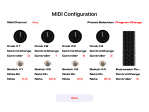 With support for MIDI Control, you can now take your tone live! Using basic MIDI messages, you can change presets, toggle switches, control knobs, and of course use the expression pedal, all from the perspective of the Floor Controller.
 What is there to say about the amp that defined high gain for the ’80’s and continues to be sought after today? Well, here it is, the VG802C Amplifier. Those in the know might understand that this amplifier went through several revisions and was getting constantly tweaked until it finally arrived at its most coveted version. We’ve captured that here, as well as an optional flaw/feature with the original implementation of the FX Loop.
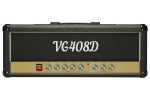 Speaking of modern feature sets, the VG408D Amplifier would define the next several decades of modernism in amplifier design. With channel switching, an FX Loop, and built-in Reverb, it was all there. This amp would gain some notoriety for including a diode limiting section, and also went through several revisions.
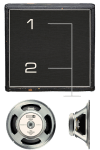 Of course with each great amplifier must come a great cabinet. And we’ve got just the thing for the new high gain amps. The VG 4x12HBA 250W ’85 Cabinet and the VG 4x12B 260W ’82 Cabinet. We suggest mixing and matching to find your tone. These ’80s cabs also sound great with some earlier classic amps too, more to come on that soon!
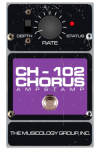 Here we have the definitive overdrive, perfectly complementing a high gain amp, cleaning up some flub in the bass, and adding just a little nudge during a ripping solo. The OD101 Overdrive definitely delivers. We’re exited to explore the wonderful world of overdrives in parallel with our extensive collection of fuzzes.






 The Musicology Group