“…there was this guy in some band that had a great-sounding Marshall that we used. We dubbed it the ‘Best Sounding Marshall in Denmark.’ We used his head for the majority of the album.” – Kirk Hammet1
Let’s take a moment to revisit one of the all time classic metal tones from Metallica’s second album, Ride The Lightning. In a previous post, we found an extremely convincing tone with our Mesa/Boogie Mark II C+ model, positing that the band got their Mesas earlier than we thought. However, a recent photograph from the Master of Puppets re-issue book gave us something new to think about. That, and the fact that we just launched the EQ200 Dual Parametric Equalizer has really changed our take on this tone. Before we dive into Kirk’s revealing quote above, let’s review some history.
Download AmpStamp now from the App Store and tap the Explore button to load curated presets like Lighting II.


Early Days
While the Marshall 2203 (Master Volume) amplifier remains a classic to this day, we came across an interesting observation about the cat-and-mouse game between service technicians and the engineers working at Marshall. For a select few technicians who knew about amplifier design and could translate the concerns and complaints of their customers into actual modifications, they would become legends in the industry. It all started with a simple request to make amplifiers louder to accommodate performing in larger spaces. Eventually, many realized that they liked the sound of their amplifiers on full blast but couldn’t take that extra volume into smaller venues like rehearsal or recording studios. Enter the concept of a Master Volume control.
The goal of a Master Volume control was simple: get the sound of an amplifier running at full volume without the loudness. Despite the simplicity of the concept, different approaches really changed how an amplifier could sound. First and foremost the preamplifier needed to be boosted in order to provide more volume and with that came a decision about how and where to boost, as well as frequency compensation choices to avoid undesirable characteristics. Variations for boosts included adding additional tube stages at the input, cascading Normal and Bright channels if available, or even repurposing tubes from tremolo circuits to get some extra gain. Once the preamplifier was blazing it was time to add a second volume control, but this also came with a choice as placing a volume control before or after the Phase Inverter didn’t sound the same. Taking things one step further, some technicians even created (famously) resistive loads that could take the full output of an amplifier on blast down to line level for re-amplification into a second amplifier, effectively placing the volume control after the power stage, capturing the theoretical “true” output of an amplifier.
Model 2203
The team at Marshall had to be aware of what their customers we’re doing, because in the mid-70s it appeared that they attempted to capitalize on these advancements by developing the model 2203: a master volume amplifier that essentially cascaded the Normal and Bright channels of it’s predecessor, with a pre-Phase Inverter master volume control. And history was made.
But customers and techs didn’t stop there. They continued to experiment with new modifications to the 2203, including shifting to a post-Phase Inverter volume control and adding clipping diodes for even more distortion. Additionally, a true line-level output was pioneered and served as a much safer way to employ post-processing when compared with previous attempts using resistive loads at the output of the amplifier.
JCM 800 Series
And so what did the engineers at Marshall do? They listened to their customers (and technicians) and introduced the model 2210. Note, the model 4210 actually came first and was a combo amplifier in the same series. While Marshall had already incorporated a second volume control in their now famous 2203 model, they attempted to incorporate the latest trends with their newest model. This included clipping diodes, an effects loop, and reverb. The effects loop was likely a compromise to a line out since running the output of effects back into the amplifier was more economical than requiring players to purchase a second amplifier. Again, it appears that this was Marshall’s answer to the community of techs that were making names for themselves offering enhancements to their stock factory products.
Ride the Lightning
But back to the main story, let’s take a look at that photo! This provides some insight into what Metallica and producer Flemming Rasmussen might have done during the recording of Ride the Lightning.
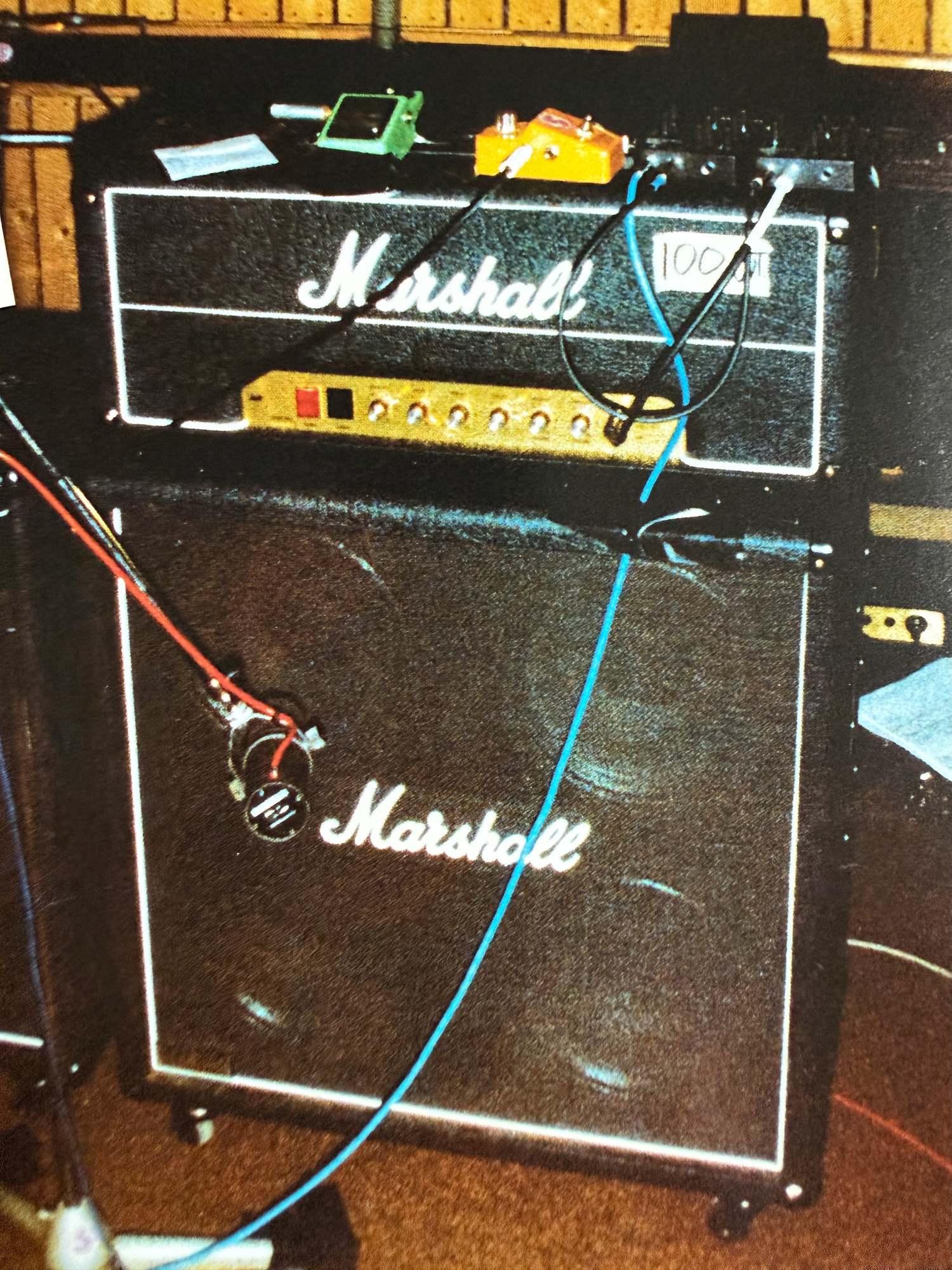
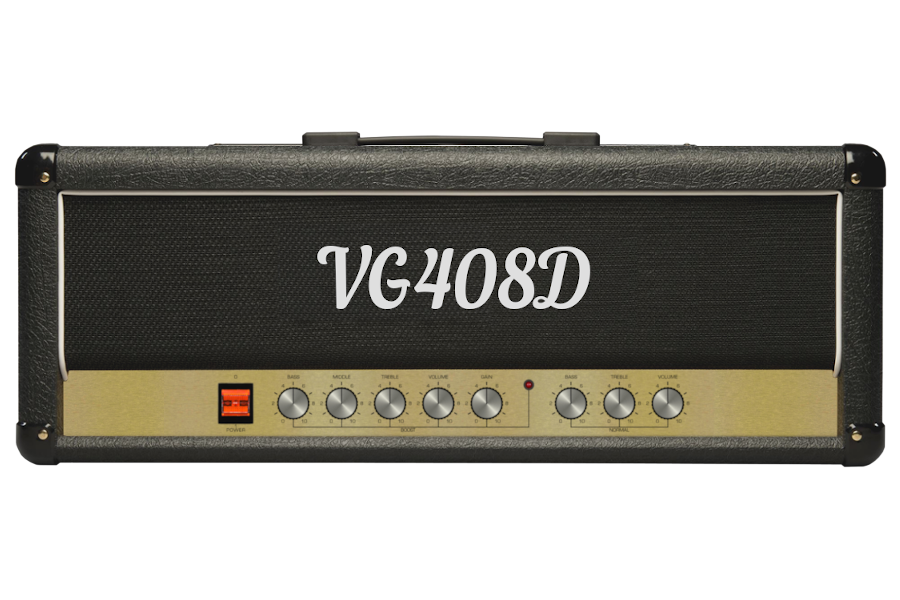
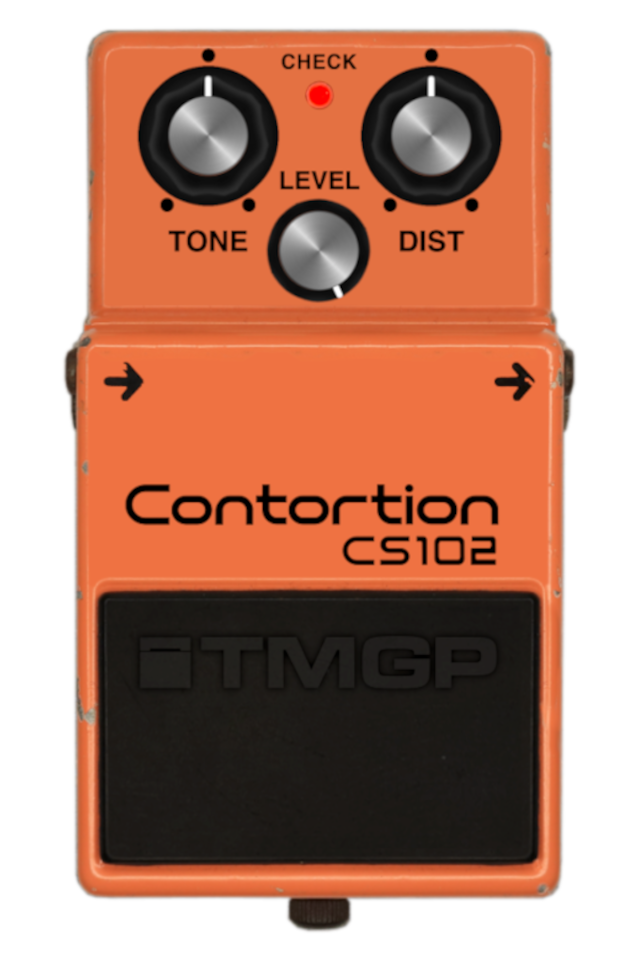
On top of the amplifier, connected in series, we see two T.C. Electronic Dual Parametric Equalizers. While we know the Aphex PEQ-1 was used on later albums, it had not occurred to us to try this out with Ride The Lightning. Of course, these pedals are from a different company but the effect is the same—parametric equalization. With the recent updates to the VG408D Amplifier, we created the Lightning II preset in a 2203-style configuration with the EQ200 Dual Parametric Equalizer and the results are nothing short of amazing. Lowering the gain from the amp to match the capability of early master volume revisions combined with more drive from the OD101 Overdrive, you can hear the unmistakable metallic chunk on those muted power chords.
We also see an Ibanez Tube Screamer, and a Stereo Box. The latter likely used as a splitter though it’s not clear how. The splitter might have been used to record both direct and mic’d sounds for the guitar, slightly blended to provide more top end in the mix. Also, it’s worth noting that this is could possibly be a cascaded amp configuration. With AmpStamp, we decided to take advantage of the FX Loop with the VG408D Amplifier as opposed to running two amplifiers in series, for convenience.
Preset: Lightning II
The classic tone revisited. It’s just sounds more… metallic! The treble shines through and though this tone would be abandoned on later records it’s place is cemented in metal history.



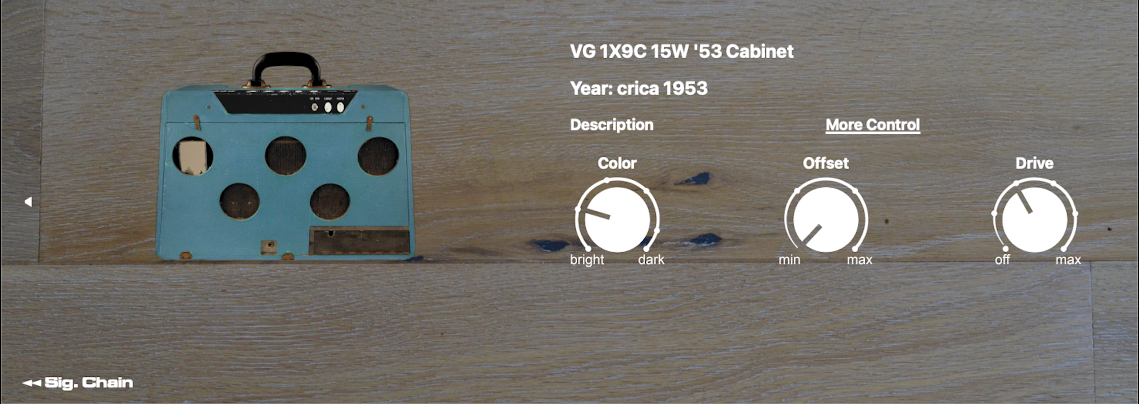
Preset: Lightning IIb
An alternate take on this updated tone, with less treble and more resonance. This tone seems like it was used on Fight Fire with Fire before things got dialed in on subsequent tracks though ultimately we’re not sure of the tracking order.
Take a listen! We think the resulting tone speaks for itself. Apparently lightning does strike twice.
1 Metallica’s Kirk Hammett Talks ‘Ride the Lightning,’ Cliff Burton and Taking Guitar Lessons from Joe Satriani | Guitar World. https://www.guitarworld.com/artists/metallicas-kirk-hammett-talks-ride-lightning-cliff-burton-and-benefits-taking-guitar-lessons-joe-satriani. Accessed 2 April 2025.






 The Musicology Group